So…I think I invented a term!? In writing my latest book (which will be published later this year [2026] through Routledge), I explore the importance of authenticity and congruence in regard to our well-being.
Among explorations of social media, capitalism and the workplace, I unpack the impact of the modern world on our mental health and how the age of attention economy, performance and disconnection seems to further illustrate Rogers concept of Psychological Tension.
All the ways that we deny and distort our experience (and selves) and how this leads to anxiety and tension, rooted in incongruence, and all the side-effects that come with it.
What is neo-authenticity?
So, what is this term that I claim to have invented and what does it actually mean?
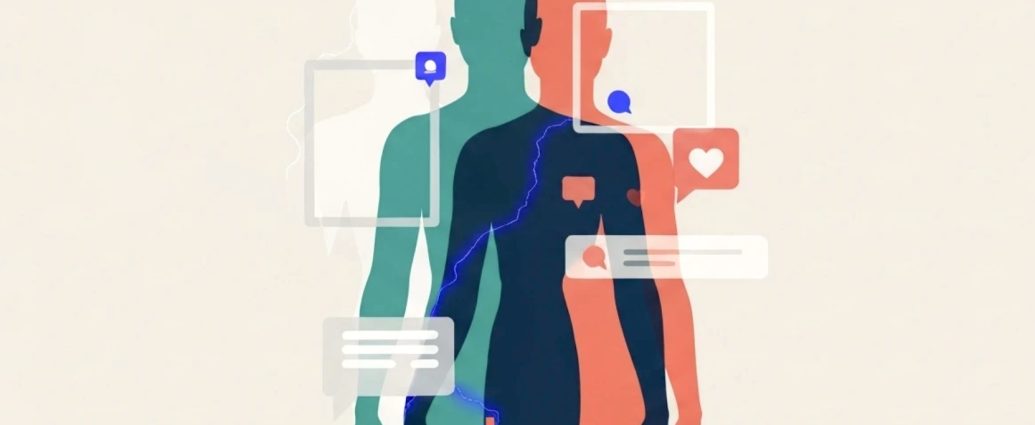
As social media has become more and more of our daily engagement, we can see a rising culture in performance, personas and presentations of our own personal brand. Contrived ways that we may present and exhibit ourselves for that sweet, SWEET dopamine hit that we are so desperately craving more than ever.
What’s made this even more complicated, is that as mental health and well-being become commodified in their own right, the performance that may have once been reserved for gym bro’s, influencers and celebrities, now moves into the very murky water of authenticity and vulnerability itself.
To take a quote from my chapter on social media and trends:
“An ironic outcome of this personal branding and influencer culture is that even authenticity itself has been packaged up into a clean, contrived and marketable trend.
Vulnerability can become performance or identity in what (and how) we share ourselves. A considered presentation rather than an authentic expression. Authenticity becomes an aesthetic. The blurry, messy, “I don’t care” Insta photos that are taken with that digital camera for a certain “vibe.” But behind its veneer has been a thought out, triple-checked and endlessly retaken photograph to represent anything but.” (Molyneux, 2026)
When posts were clearly contrived for brands, influencers and celebrities, we could probably spot the distinction a little more readily. Knowing they have huge budgets and a whole team behind every post, as well as a clear motive. But now we move into new territory where we become brands ourselves. With an image to uphold, a message to advertise and the imperfect edges smoothed out.
However, the new emergence of authenticity and mental health as a trend in its own right, takes us into a risky grey area where personal brand meets emotional aesthetic. The very portrayal of authenticity itself becomes inauthentic i.e. neo-authenticity.
What’s the big deal?
So, why does it matter so much? As well as the focus of my book being the importance of authenticity and congruence, it’s also something that I largely believe is at the heart of our well-being.
Carl Rogers person-centred theory is based on the very notion that at the root of much of our distress and anxiety are all the ways that we are being incongruent. Whether it is in our awareness or not, there will be many ways that we either deny or distort our authentic experiences (defending against any experiences that are too threatening), or hold on so tightly to our self-concept, meaning we have to reject anything that compromises it.
Although these are all perfectly understandable ways for us to survive and feel safe in the world, there is also often a price to pay for this. With the cost increasing the more incongruent we are and the greater the psychological tension it creates.
The more that we have to deny of ourselves and our experiences, the more we are having to battle against and keep at bay. Creating a whole host of symptoms that we may think are not even related (anxiety, depression, insomnia, stress, poor appetite, relational struggles etc.)
Not only are we up against the many conditions of worth and introjections we carry with us from childhood, but we now also have the pervasive presence of social media in our daily lives – not only the impacts of scrolling and what we absorb, but also how we present ourselves and respond to its feedback.
And as I mention in the book, we can so often relate to these things as exclusive to the younger generation, but this goes for the latest professional post on LinkedIn, our Facebook updates or even what we choose for our profile pictures.
What do we do?
As I argue in the book, I think the first step with many things is to be aware of the structures we move in and what their ultimate purpose is. It doesn’t mean we have to have a full social media blackout and abandon all technology. But maybe just knowing that these platforms are there to keep us engaged, cause reactions, sell ads and collect data is a starting point.
In addition to this, it is also worth being more aware that most of what we are absorbing are thought out, purposeful posts that probably only show us a small percentage of reality (and more often than not, the more favourable part). We then also set up the dangerous comparison between our fallible, messy, selves that we know all too well, and the infallible personas that are the M.O. of social media and personal brands.
There is also greater risk with the growing presence of neo-authenticity; the posts that might look much more human and vulnerable, but behind it is still a considered presentation that has been chosen to be made public and encourage interaction.
Needless to say, there is nothing wrong with peoples desire to share, create and be more open, but the exchanges that we engage with on these platforms are becoming increasingly harder to distinguish as purposeful and authentic, especially when they are often housed in the contrived aesthetic of authenticity and vulnerability
My hope in sharing this article with you was not only to introduce and explain the term “neo-authenticity” but also to go some way to explaining both its dangers, but also links to person-centred theory and psychological tension.
With social media being an ever-present and daily engagement for most of us, it feels worthy of knowing the terrain we are navigating. Not only developing our self-awareness in terms of why we engage with these platforms and their impact on us, but also grasping the underlying purposes of these structures and their users.
Ultimately, this understanding helps us navigate the complexities of interacting with digital personas and platforms, as well as the far-reaching impacts this is likely to have.